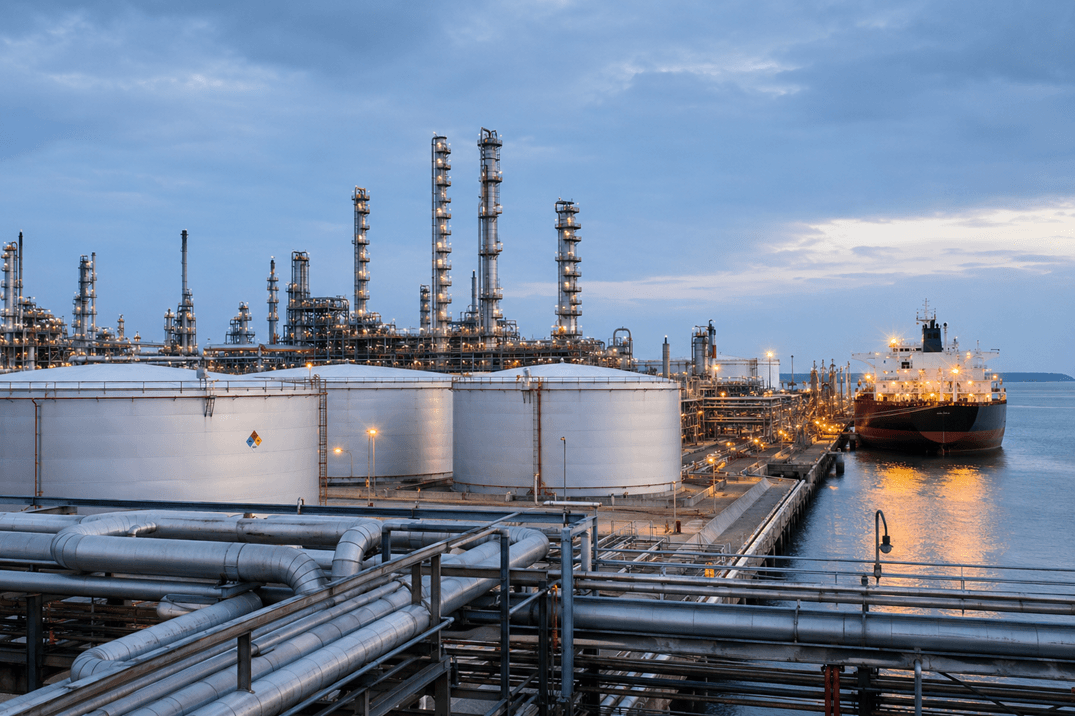
Dangote Refinery Expands Crude Sources with First UAE Imports While Maintaining Strategic Partnership with NNPC
Nigeria's energy landscape continues to evolve as the Dangote Petroleum Refinery has imported crude oil from the United Arab Emirates (UAE) for the first time, marking a significant diversification of its crude supply sources.
Nigeria's energy landscape continues to evolve as the Dangote Petroleum Refinery has imported crude oil from the United Arab Emirates (UAE) for the first time, marking a significant diversification of its crude supply sources. The development reflects the refinery's strategy to secure a more flexible and resilient supply chain while maintaining its longstanding commercial relationship with the Nigerian National Petroleum Company (NNPC) Limited.
According to industry traders, the refinery recently received a cargo of Murban crude from the UAE, broadening its portfolio of feedstock sources beyond Nigerian crude grades. The move comes as the 650,000-barrel-per-day refinery continues to optimize its operations and strengthen supply reliability to meet growing domestic and regional demand for refined petroleum products.
Industry analysts emphasize that the import should not be interpreted as a reduction in NNPC's importance to the refinery. Instead, it highlights the growing complexity of global crude markets, where modern refineries source different crude grades to achieve operational flexibility, improve refining efficiency, and ensure uninterrupted production.
Diversifying Supply for Operational Efficiency
The Dangote Refinery, Africa's largest single-train refinery, has steadily increased production since commencing commercial operations. As production capacity expands, the refinery requires a consistent and reliable supply of crude oil that meets its technical and operational requirements.
By introducing UAE crude into its supply mix, the refinery gains additional flexibility in blending different crude grades to maximize yields of premium petroleum products such as gasoline, diesel, aviation fuel, liquefied petroleum gas (LPG), and petrochemical feedstocks.
Energy experts note that many world-class refineries routinely purchase crude from multiple producing countries to optimize refinery performance and reduce exposure to supply disruptions.
NNPC Remains a Strategic Supplier
Despite the arrival of imported crude cargoes, NNPC Limited continues to play a central role in supplying Nigerian crude to the Dangote Refinery under existing commercial arrangements.
NNPC has consistently demonstrated its commitment to supporting domestic refining by supplying locally produced crude, contributing to Nigeria's broader objective of reducing dependence on imported refined petroleum products.
The continued collaboration between NNPC and the Dangote Refinery aligns with the Federal Government's vision of strengthening Nigeria's downstream petroleum sector while promoting energy security and maximizing the value of the country's hydrocarbon resources.
Industry observers believe the partnership remains one of the most significant developments in Nigeria's modern petroleum industry, combining indigenous crude production with world-class refining capacity.
Strengthening Nigeria's Energy Security
The availability of multiple crude supply options enhances the resilience of refinery operations and contributes to a more stable domestic fuel market.
A refinery capable of sourcing crude from both domestic and international producers is better positioned to manage supply fluctuations, respond to changing market conditions, and maintain continuous production.
This flexibility ultimately benefits consumers by improving the availability of refined petroleum products and reducing the risk of supply shortages.
The development also supports Nigeria's ambition of becoming a major refining hub for West Africa, supplying high-quality fuels to neighbouring countries while reducing the continent's reliance on imported petroleum products.
A Positive Signal for Investors
The refinery's ability to attract international crude suppliers demonstrates growing confidence in Nigeria's downstream petroleum industry.
Global crude producers view large, sophisticated refineries like Dangote as valuable long-term customers capable of purchasing significant crude volumes.
This increasing integration into global energy markets enhances Nigeria's reputation as both a major crude producer and an emerging refining powerhouse.
Industry analysts suggest that diversified crude sourcing reflects commercial maturity rather than dependence, allowing refinery operators to optimize economics while maintaining competitiveness.
Economic Benefits
The continued expansion of refining activities is expected to generate substantial economic benefits across Nigeria.
These include:
Increased employment opportunities.
Higher demand for logistics and marine services.
Growth in engineering and maintenance activities.
Expansion of local supply chains.
Increased foreign exchange earnings through petroleum exports.
Improved availability of refined products for domestic consumption.
The refinery also supports Nigeria's broader industrialization agenda by providing feedstocks for petrochemical manufacturing and other value-added industries.
Looking Ahead
As the Dangote Refinery continues ramping up production, industry stakeholders expect further optimization of crude procurement strategies based on market conditions, refinery requirements, and commercial considerations.
Meanwhile, NNPC Limited remains a critical partner in supporting domestic refining and advancing Nigeria's energy security objectives.
The combination of local crude production, strategic international sourcing, and world-class refining capacity positions Nigeria to strengthen its role in the global energy industry while creating long-term economic value.
The first import of UAE crude represents not a departure from domestic partnerships but an evolution toward a more diversified and resilient supply strategy. Together, NNPC and the Dangote Refinery continue to play complementary roles in transforming Nigeria's petroleum sector, enhancing fuel security, and reinforcing the country's ambition to become Africa's leading energy and refining hub.
Ready to optimize your infrastructure?
Consult with our senior engineers today for a comprehensive evaluation of your project requirements.